

Views: 0 Author: Site Editor Publish Time: 2025-10-17 Origin: Site
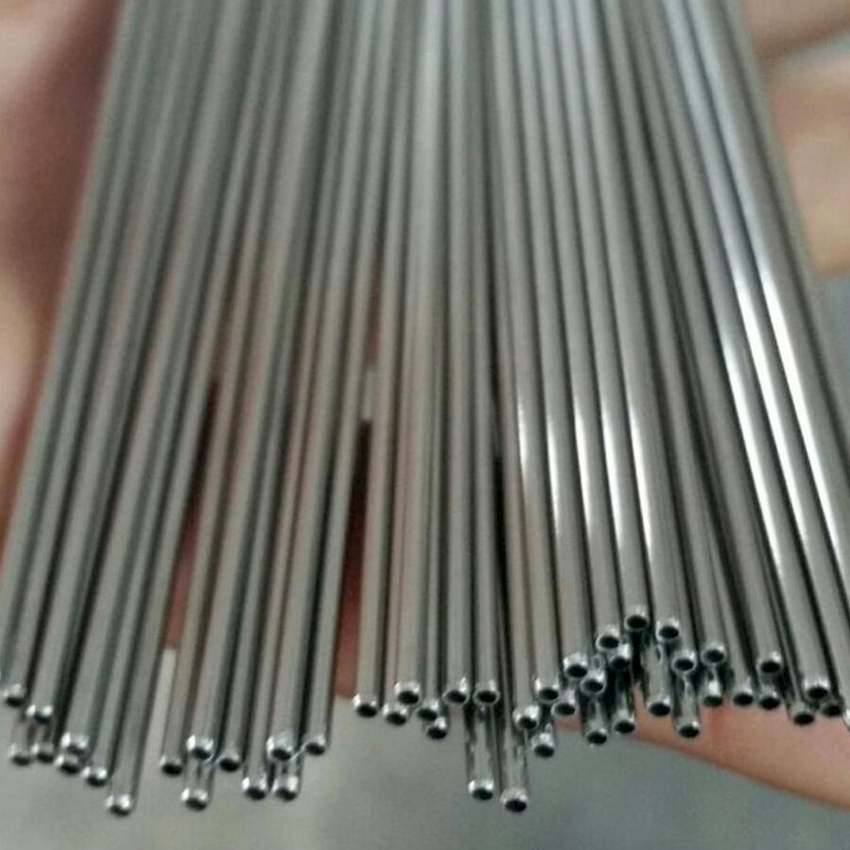
Incoloy 825 capillary tubes enhance the corrosion resistance of chemical equipment by leveraging the intrinsic advantages of alloy composition, precision manufacturing processes, and scene-specific design adaptations. This multi-dimensional corrosion protection system effectively improves the durability and safety of chemical equipment under harsh corrosive conditions, providing critical support for the stable operation of chemical production.
Alloy Composition Advantages
The corrosion resistance of Incoloy 825 is derived from the synergistic effects of various elements. The alloy contains 20%-23% chromium, which enables the rapid formation of a dense chromium oxide passive film on the surface of the capillary tube. This film acts as a “protective barrier,” preventing corrosive ions like chloride and sulfate from contacting the substrate. Even if the passive film is locally damaged, chromium elements can quickly re-oxidize and repair the film, preventing the spread of corrosion. Additionally, the 38%-46% nickel content enhances the alloy’s toughness and reduces the risk of stress corrosion cracking under high temperature and pressure conditions. The 2.5%-3.5% molybdenum and 1.5%-2.5% copper further enhance resistance to non-oxidizing acids like sulfuric and phosphoric acids, making the alloy particularly suitable for common acid liquid transport scenarios in the chemical industry.
Manufacturing Process Optimization
The manufacturing process further enhances corrosion resistance. The capillary tubes are produced using a cold-drawing process, which ensures a smooth, burr-free, and dent-free inner surface, reducing the retention of corrosive media and lowering the likelihood of localized corrosion. The uniform wall thickness design ensures that the tube is subject to balanced stress across its entire length, preventing corrosion rate differences due to uneven wall thickness. In some specific applications, surface polishing or secondary passivation treatments can be used to further optimize the integrity of the passive film, thereby extending the capillary tube’s service life in highly corrosive environments such as chlorinated saltwater or organic acids.
Scene-Specific Design Adaptations
The scene-specific design of Incoloy 825 capillary tubes ensures that their corrosion resistance is more closely aligned with practical needs. As critical components such as feed pipes for reactors and flow tubes for heat exchangers, Incoloy 825 capillary tubes are capable of withstanding chemical high-temperature conditions ranging from 100°C to 600°C, while also resisting a wide range of corrosive media. This significantly reduces equipment leakage and downtime caused by corrosion.
Conclusion
From alloy composition to manufacturing processes and application design, Incoloy 825 capillary tubes enhance the corrosion resistance of chemical equipment in multiple ways. They are an ideal choice for addressing complex corrosive environments, offering reliable support for the long-term, stable operation of equipment.
This is an introduction to Incoloy 825 capillary tubes from Zhongxing Nickel Alloys. For more information, feel free to call us at: 19145729409.


